Following a sharp increase in the price of gas and electricity, inflation now stands at 4.2%, up from 3.1% in September.
It’s at its highest rate since November 2011 and stands 2.2% above the 2% rate that the Bank of England (BoE) aims for. This sharp rise in the cost of living is applying more pressure to households across the UK.
Read on to find out more about how inflation works, how it can affect your finances, and what you can do to prevent it from harming your wealth.
How inflation erodes your purchasing power
Inflation is a measure of the rate that prices are rising. Low levels of inflation are hard to detect over the long term, but price rises can have a big impact on how far your money will go.
Inflation means your money loses value over time. As an example, here’s how much bread you could buy with £1 over the past few decades:
- 1970: £1 = 10 loaves of bread
- 1980: £1 = 3 loaves of bread
- 1990: £1 = 2 loaves of bread
- 2020: £1 = 1 loaf of bread
Today, £1 can buy you far less bread than you’d have got in 1970. And, in another 10 years, it will buy even less. This is referred to as the “purchasing power” of your money.
Economic stagflation will reduce the purchasing power of money you save in the bank
Economic stagflation happens when slow economic growth occurs alongside high levels of inflation. This will affect the purchasing power of money you have saved in the bank.
One way to avoid this problem is to make sure your savings account pays more interest than, or at least matches, the rate of inflation. So, with inflation at 4.2%, ideally you want your savings in an account paying at least 4.2% interest.
This is easier said than done, however, as there are very few savings accounts paying high enough interest to make up the necessary difference.
Plus, if you have to pay tax on your savings interest, you’ll need an even higher rate of interest to keep pace with inflation.
Your income may not keep pace with inflation
If the money you earn remains stable or rises less than inflation, you’ll see a fall in the real value of your income because you’ll be able to buy less with what you make.
Some people will be lucky and see their income keep pace with inflation and rising prices. Lorry drivers, for example, will probably see an increase in their earning power because firms need to attract more drivers to fill the roles available and so will have to pay higher salaries.
A few things that you may have noticed cost more
Petrol
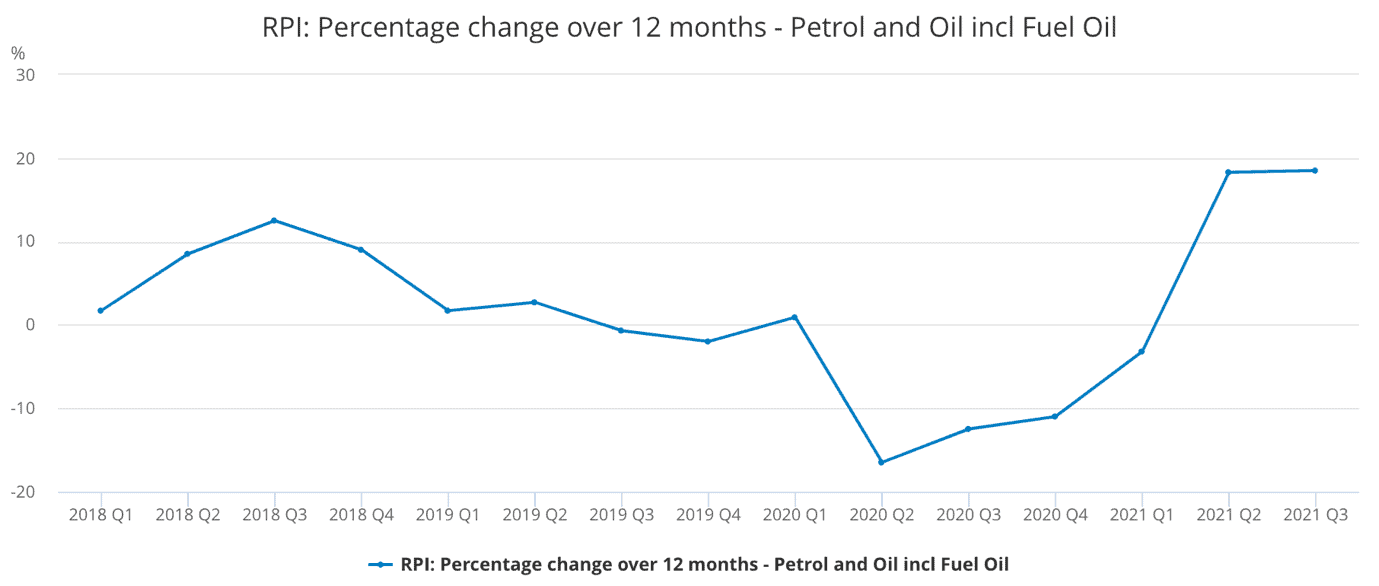
Although the autumn fuel crisis was short-lived, and you no longer need to queue to fill your car with petrol or diesel, prices are still high. In November, the RAC revealed that the average price of unleaded petrol was 146p a litre and diesel recently reached 150p a litre.
If you need to fill up a 55-litre family car with unleaded petrol, it will now cost more than £80.
RAC fuel spokesperson Simon Williams warned drivers to expect an “excruciatingly expensive winter”, and those on a low income or who use their car to travel to work every day will particularly feel the pinch.
Source: Office for National Statistics (ONS)
Heating bills
As we enter the colder months, the cost of heating our homes naturally increases. But this winter these costs are likely to hit some people far harder than usual.
There’s been plenty of press coverage about the rising price of gas and electricity. While the cost to suppliers has soared to unprecedented levels for a variety of complex global reasons, the effect is now being felt by consumers.
Several suppliers have gone bust, and their customers have been moved to another supplier, but many will now be on a more expensive tariff.
Even if your electricity supplier is still in business, chances are you’ll have noticed an increase in your bills or have had to increase your monthly direct debit in line with rising prices.
Crisps and snacks
Data from Kantar showed that the cost of savoury snacks, such as Pringles, Doritos, and Hula Hoops, rose 7.6% in the 12 weeks to the end of October.
As well as these moreish snacks, the price of canned cola, potato crisps and cat food all increased by almost 6% or more.
Retailers have had to resort to price hikes in an attempt to offset higher costs of transport, fuel, stock and wages.
Steps you can take to protect your finances from inflation
While you can’t stop inflation from happening, your personal rate of inflation depends on how you spend your money. It won’t necessarily match the official rate of inflation.
Calculate your personal inflation rate
You can calculate your personal inflation rate by tracking your own spending and calculating the percentage change from one year to the next.
If you keep a household budget, you may be able to work this out easily by looking back to see what you were spending this time last year versus what you have spent this year.
Invest your cash
With your wealth and investments, investing wisely in the stock market can give your money the best opportunity to beat inflation and grow.
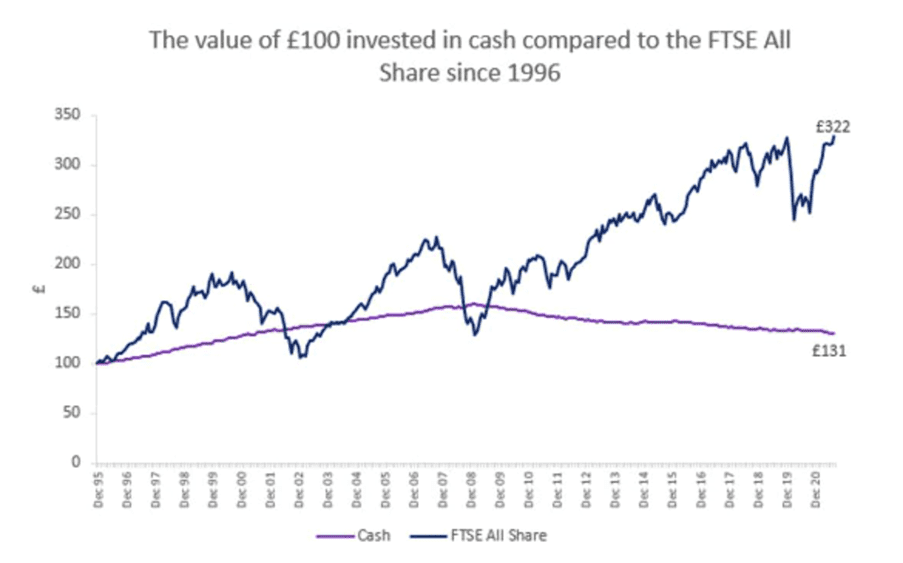
Investing in the stock market comes with some risk, but history shows that, over the long term, equity investments tend to outperform cash and produce an above-inflation return.
To illustrate the power of investing in the stock market, the chart below illustrates how £100 invested in cash compared to the FTSE 100 index.
Source: Refinitiv Datastream (total return assumes that all earnings and dividends are reinvested.)
Protect your money in a “safe haven”
During times of inflation, some people prefer to put their money in so-called “safe havens”.
“Safe havens” are assets that you’d expect to remain popular over decades because the supply is limited. “Safe havens” can include rare or unique items such as classic cars, works of art, or commodities such as gold or platinum.
Talk to a financial planner
For the best chance of protecting your wealth and finances against inflation, talk to a financial planner. They will have a deep understanding of the problems you face and the different ways you can mitigate the issues based on your own financial circumstances.
Get in touch
If you’re concerned about the effects of inflation and want to find out how you can protect your wealth, we can help.
Email hello@bluewealth.co.uk or call us on 0117 332 0230.
The content of this newsletter is offered only for general informational and educational purposes. It is not offered as and does not constitute financial advice.
The value of your investment can go down as well as up and you may not get back the full amount you invested. Past performance is not a reliable indicator of future performance.
Blue Wealth Ltd is an appointed representative of Best Practice IFA Group Ltd which is authorised and regulated by the Financial Conduct Authority.