Author: Rob Bowers

3 scary financial scams to be aware of and how to protect yourself and others

Mature man holding a piggy bank, looking scared and trying to protect his savings from being stolen

Technology has made it easier than ever for scammers to target victims. And their tactics are growing ever-more sophisticated. Even people who research firms and deem them to be genuine have found themselves duped out of their life’s savings.

One of the most recent scams to make the headlines is “push payment” fraud. This is when victims are tricked into transferring money to a fraudster in the belief they are calling from the victim’s bank or the police.

Last year, scammers managed to steal £479 million from 150,000 victims this way – an increase of 22% on the previous year.

And that’s not all.

In the first quarter of the 2021/2022 financial year, the Financial Ombudsman Service saw a frightening 66% rise in fraud and scam complaints. There have so far been 5,025 cases in 2021. During the same period last year, they received 3,028 cases.

Even if you’re financially savvy, a scammer can catch you at a vulnerable time and persuade you to part with your cash. So, here are a few things to watch out for and advice about how you can protect yourself from letting a scammer get away with your hard-earned money.

3 common financial scams you need to be aware of

More than three cases of fraud are recorded every five minutes, so it’s wise to know what to watch out for.

While there are multiple ways scammers might target your wealth, these are three of the most common financial scams to be aware of.

1. Early pension release – Watch out for scammers using phrases like “pension liberation” or “pension loan”

Pensions are often one of your largest assets, but they are locked away until you reach a certain age. At the moment, most people are allowed to access their pension at age 55 without penalty. In 2028, this will increase to age 57.

You may wish to retire early or be tempted to boost your income by accessing your pension early. But beware of scammers attempting to capitalise on your temptation.

You’re only allowed to access your pension savings before a specific retirement age under exceptional circumstances. For example, if you are diagnosed with a terminal illness, you may be able to withdraw funds from your pension without penalty.

If someone tries to persuade you it’s possible to get money out of your pension early, don’t fall for it. If you succumb, you could face a large tax bill and, worse still, lose all your pension savings.

2. Share, bond, and “boiler room” scams – Watch out for cold-callers offering an opportunity to invest in shares or bonds

Fraudsters operate out of so-called “boiler rooms” to cold-call potential investors.

If you’re unfortunate enough to receive one of these fraudulent cold-calls, you will usually be offered shares or bonds that are worthless, overpriced, or may not exist at all.

Fraudsters will use sophisticated, high-pressure tactics to try to get you to invest.

As well as cold-calling their potential victims, they’ll sometimes use online ads or adverts in newspapers or magazines to encourage potential investors to call them directly.

3. Overseas property and crop scams – watch out if someone offers you a high-return, low-risk investment opportunity

If someone offers you the opportunity to invest in overseas property or crops, they will often encourage you to buy a plot of land, claiming it will be used to build property or for agricultural commodities.

Investment periods are long, often around five years. This means it can take some time before investors realise they have been scammed and their money is long gone.

These fraudsters will also deploy high-pressure tactics to encourage you to make a quick decision.

How to protect your money from financial fraudsters

First, arm yourself with knowledge about how scammers and fraudsters operate. Reading this article is a good start, but it’s also a good idea to share your learning with others.

A five-minute conversation could help prevent fraud

Talk to your friends and family about what they need to look out for. A friendly warning from a trusted friend could be all it takes to help protect someone you know.

Useful anti-fraud checklists

If a stranger calls or emails asking for personal details, ask yourself these questions. It could be all it takes to help you identify a fraudster and protect your money.

5 ways to spot a fraudulent call

  1. Were you expecting the phone call, or did it arrive out of the blue?
  2. Are they asking you to confirm sensitive details such as your full name, address, or banking details?
  3. Are they pressing you for an instant or fast response?
  4. Are they asking you for money?
  5. Is the caller avoiding having to use the actual name of your bank or utilities company?

5 ways to spot a fraudulent email

  1. Is the greeting generic or impersonal?
  2. Does the branding on the email match the company or government website?
  3. If you’ve received a suspicious email from your bank or other company, has it come from an odd email address?
  4. Are you being asked to change your password even though you haven’t received a request to do so?
  5. Is the formatting strange or are there spelling mistakes?

If you’re concerned that you may have been the target of fraud, we’re here to provide information and lend support.

Get in touch

If you’ve been approached and are worried it may be a scam, please get in touch. Please email hello@bluewealth.co.uk or call us on 0117 332 0230.

National Insurance and Dividend Tax rise as government suspends State Pension triple lock

British prime minister, Boris Johnson

This week, the government has made two major policy announcements that are likely to directly affect your finances.

A much-anticipated National Insurance rise will result in an increased burden on workers including, for the first time, those above State Pension Age.

In addition, the government has suspended the State Pension triple lock, meaning that pensioners will receive a much more modest increase than anticipated.

Read on for everything you need to know about these policy changes.

The new “health and social care levy” will push up National Insurance bills by 1.25%

Despite a clear commitment in their last election manifesto not to raise taxes, the government has unveiled a 1.25% hike in National Insurance contributions from April 2022. This is to raise additional revenue to fund health and social care.

From April 2022, employees will begin to pay the levy through an increase in their National Insurance contributions. The 1.25% increase will also be levied on employers.

This additional contribution will then become a “health and social care levy” from April 2023 and will appear as a separate deduction on payslips.

According to the Guardian, an individual earning £50,000 can expect to see their National Insurance contributions rise from £4,852 to £5,357 each tax year, equivalent to a £505 tax increase. If you earn a salary of £100,000, you can expect your annual contributions to rise by £1,131.

The government says that, for the next three years, the tax increase will generate an additional £12 billion a year for health and social care. Of this, they have earmarked £5.4 billion over the period specifically for social care, with another £8.9 billion going on what is termed a “health-based Covid response”.

Once the NHS backlog starts to clear, ministers say that more of the money will go to social care, although how this will happen has not been set out.

Extra money will also be sent from Westminster to Scotland, Wales, and Northern Ireland, which the prime minister said would receive more money than they paid in, as a “union dividend”.

A million working pensioners will pay National Insurance for the first time

In another radical reform, around 1 million working pensioners will pay National Insurance contributions on their earnings from 2023.

Under the current system, taxpayers stop making National Insurance contributions when they reach 66, the point at which the State Pension kicks in.

It will be the first time that a government has asked pensioners to pay, with contributions starting at a rate of 1.25% in April 2023.

The Telegraph reports that a working pensioner earning £60,000 a year will go from paying nothing to paying £630 a year in National Insurance on top of Income Tax.

The government has proposed a cap on lifetime social care costs

Currently in England, if people have assets worth more than £23,250 then they must pay for their social care and there is no cap on the costs.

Under the new system, anyone with assets below £20,000 will not have to pay anything towards their care. Those with assets from £20,000 to £100,000 and above will have to contribute, on a sliding scale. This depends on contributions from local authorities, which deliver much of social care.

People in this bracket will not contribute more than 20% of their assets each year and, once their assets are worth less than £20,000, they would pay nothing more. However, they might still contribute from any income they receive.

Those with assets above the £100,000 threshold must meet all fees until the value of their assets fall below this amount.

Boris Johnson also announced a lifetime social care “cap” of £86,000, meaning that no individual will be asked to pay more than this sum for care in their lifetime.

This new means test system and the £86,000 cap will come into force in October 2023.

Dividend Tax is set to rise from April 2022

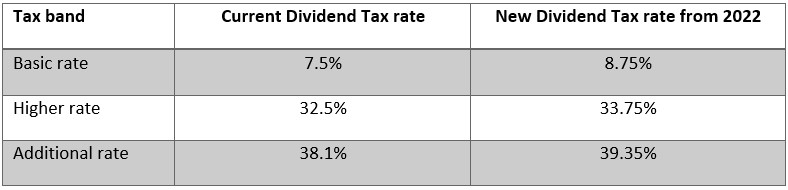
Alongside the National Insurance rise, Dividend Tax rates will also increase by 1.25% from April 2022. This change will mostly affect investors and business owners.

If you take home more than £2,000 a year in dividends, you will face a slightly higher bill regardless of your Income Tax band.

For example, if you’re a basic-rate taxpayer receiving £3,000 in dividends then you will pay Dividend Tax on £1,000. The government’s proposed changes mean that your bill will rise from £75 to £87.50.

Alternatively, if you’re a higher-rate taxpayer taking £10,000 in dividend payments then you would pay 33.75% on £8,000 of dividends. This would result in a Dividend Tax bill of £2,700, up £100 from the current system.

The government will suspend the State Pension triple lock for one year

In a move designed to save the government around £8 billion a year, work and pensions secretary, Thérèse Coffey, broke a second manifesto commitment by announcing that she was suspending the State Pension triple lock for one year.

She told the House of Commons that sticking to the triple lock – which promises that the State Pension will rise by the highest of inflation, earnings, or 2.5% – would be unfair, given that wages were increasing at a rate of well over 8% a year.

The distortion to national average earnings has been caused by the pandemic, as earnings fell at the start of the first lockdown before rising sharply as the furlough scheme ended. Had the government stuck to its commitment, pensioners would have expected an increase of between 8% and 9%.

Instead, the State Pension will rise more modestly in 2022 – either by 2.5% or price inflation. All eyes will now be on September’s inflation figure (announced in October) to determine how much the State Pension will rise next April.

Get in touch

If you have any questions about how the National Insurance increase, Dividend Tax rise, or triple lock suspension will affect you and your finances, please get in touch.

Guide: Leaving an inheritance vs gifting during your lifetime

Have you thought about how you’ll pass wealth on to those who are important to you? Traditionally, this has been done through inheritance, but it’s becoming more common to gift during your lifetime.

Our latest guide explains why more families are choosing to gift during their lifetime and the pros and cons of each option. Whichever option you decide is right for you, our guide will enable you to fully understand your situation and make sure your wishes are carried out, and will explain everything from writing a will to calculating the long-term impact of gifting.

It can be difficult to think about how you’ll pass on wealth to loved ones, but it’s important to set out a plan.

Download Leaving an inheritance vs gifting during your lifetime to discover the steps you should take.

If you have any questions about passing on wealth, please contact us.

Guide: The guide to later-life planning and care

scenic Australian beach at sunset

When you think about your future, how far ahead do you plan? Perhaps you’ve thought about what your life will look like in 10 years, but have you considered your later years?

While retirement planning is common, it’s often the early years of retirement that people focus on. However, your needs and lifestyle wishes can change drastically over a retirement that could last decades. It’s just as important to think about how you’ll spend your later years as those first years when you are still celebrating retirement.

You can download The guide to later-life planning and care to start thinking about your long-term plan. It’s here to help you understand why it’s important and what steps you can take. It covers:

  • Reasons to make later-life planning part of your financial plan
  • How to create long-term financial security
  • Why care is something you should think about.

If you have any questions about your long-term plan or care, please contact us.

Should you capitalise on rising house prices and downsize?

relaxed businessman weighs up a big house and a small house

If you’re retired or approaching retirement, you may have considered the possibility of selling up and downsizing. Maybe the buoyant property market during the last few months has motivated you to make the move?

Read on for information about the current housing market and what you should consider before you cash in and scale down your home.

The UK property market is enjoying a boom

Figures released by Nationwide revealed that UK house prices rose 13.4% in the 12 months since June 2020; the fastest pace seen since November 2004. Growth has been pushed by the temporary Stamp Duty cut, but we’re yet to see what will happen once this tax break ends.

The UK property market has been rising since the government first introduced the Stamp Duty holiday. While the biggest savings opportunity has passed, you can still save up to £2,500 if you buy a home before the end of September 2021.

Stamp Duty only applies in England and Northern Ireland. If you’re purchasing property in Wales, you’ll have to pay Land Transaction Tax on main amounts over £180,000 on residential properties. In Scotland you’ll be charged Land and Buildings Transaction Tax and, again, rates vary.

How the Stamp Duty reduction works

You only have to pay Stamp Duty on amounts over £250,000 if you purchase residential property between now and 30 September 2021. If you’re a first-time buyer, you don’t pay Stamp Duty up to £300,000.

The table below will help you work out the Stamp Duty you might owe on a first residential purchase (note that the rates for second homes and buy-to-let properties will be higher):

Property value Stamp Duty rate
Up to £250,000 Zero
The next £675,000 (portion between £250,001 to £925,000) 5%
The next £575,000 (portion from £925,001 to £1.5 million) 10%
The remaining amount (portion above £1.5 million) 12%


The number of homes being sold rose significantly during the Stamp Duty holiday

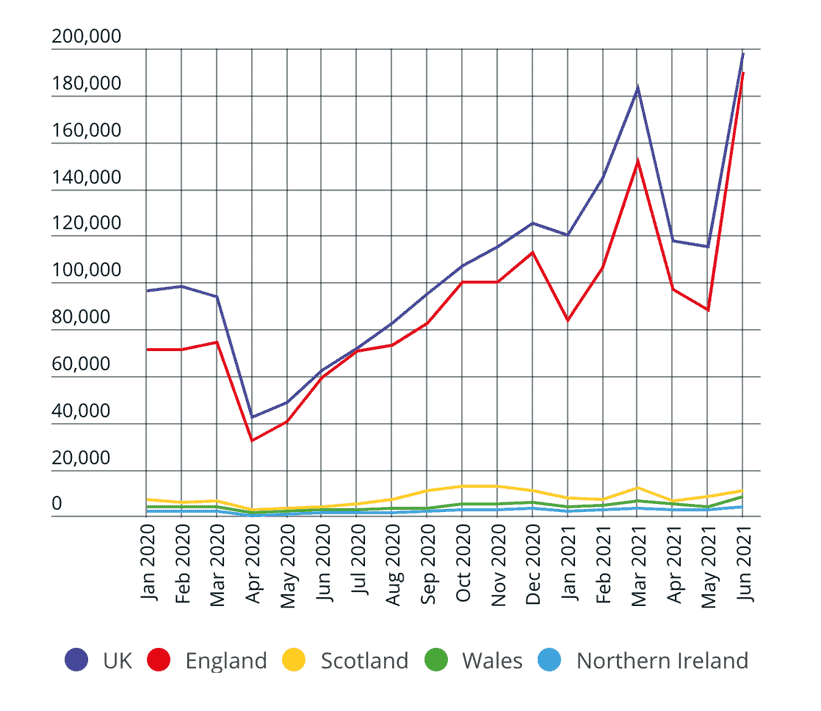
Data from HMRC suggests that 198,240 sales completed in June 2021.

The enticement to beat the 30 June Stamp Duty deadline probably gave these figures a boost as, before that date, you only had to pay duty on anything above £500,000.

The chart below shows the number of house sales registered each month since the start of 2020 and illustrates how the Stamp Duty holiday affected the number of sales completed.

Source: Which? From HMRC, 21 July 2021. Figures represent all residential property transactions of £40,000 or above. Figures for April, May and June 2021 are provisional.

The Stamp Duty holiday undoubtedly helped to increase home sales. However, once the tax breaks and government support schemes end, this buoyancy is unlikely to last.

Lack of supply could keep prices high

According to estate agencies, the rise in buyer demand hasn’t been matched with a glut of new properties coming on the market. This imbalance could help keep prices high in the final few months of 2021, but this has yet to be seen.

As well as supply and demand, the general health of the economy and interest rates also influence house prices. While we can all admit the economy has seen better days, the current low interest rates make it cheaper to borrow and this could help sustain house prices.

Make sure you move for the right reasons

If all of this has got you looking around and thinking now’s the time to cash in, sell up and find somewhere smaller to live, make sure you’re moving for the right reasons.

People choose to move home in later life for a variety of reasons. You may want to move somewhere different or closer to family. Or maybe you’ve had a health scare or lost a loved one and this has made you assess your living arrangements.

Whatever the circumstances, a pros and cons list is a great way to help you decide if downsizing is the right move for you.

These pros and cons might be a good place to start.

Advantages of downsizing

Release equity

If you’ve owned your home for years, you’ve probably seen it increase in value. You might have already paid off your mortgage or be very close to doing so. Buying something smaller – and cheaper – will help you release equity and give you extra money to spend or invest to boost your retirement income.

Reduce maintenance

A smaller property usually means less maintenance and may suit your needs better as you get older.

Reduce your bills

Smaller homes are usually cheaper to run. You might see a reduction in Council Tax, and heating your smaller house should be cheaper too.

Move to a more suitable location

If you’re no longer working, or the pandemic has meant you can continue to work remotely, you have the freedom to choose a property in a different location. You may wish to move closer to friends or family, or to find somewhere more convenient and closer to local shops and services.

Disadvantages of downsizing

Your children might want to come home

Your children may have left home, but are they gone for good? High house prices and rent costs mean that more adult children are choosing to live with their parents. If this happened, would you have the space to accommodate them?

You don’t want to leave

Leaving the family home is likely to be emotional, especially if you have lived in the same house for years and raised your children there. Make sure the whole family is ready to say goodbye to the house you love by having open conversations about your plans. Don’t rush into a decision you might later regret.

Leaving friends and neighbours behind

Moving closer to family may mean leaving behind your close network of friends and neighbours, and you might end up with less day-to-day social contact. This could put more responsibility on your friends and family, which could leave you feeling uncomfortable.

Hard to find a home to love

After years of living in a large home, you may find it difficult to find a property that doesn’t leave you feeling claustrophobic with smaller rooms and little outside space.

Lack of options within your budget

Smaller isn’t always cheaper. If there is a lack of smaller properties in the area you hope to move, you may find houses aren’t as cheap as you expected.

Think things through carefully before you decide to downsize

Selling the family home and downsizing to somewhere smaller and cheaper can present significant financial advantages, but it’s not a decision you should take lightly. If you don’t plan and think things through, you could end up unhappy with less money than you had hoped, less space, and less flexibility than you want.

If you want to understand more about the implications of releasing equity from your family home and how much it could boost your retirement income, we can help.

Please email hello@bluewealth.co.uk or call us on 0117 332 0230 to discuss your goals and desires.

Please note

This article is for information only. Please do not act based on anything you might read in this article. All contents are based on our understanding of HMRC legislation, which is subject to change.

Your home may be repossessed if you do not keep up repayments on a mortgage or other loans secured on it.

Think carefully before securing other debts against your home.

Guide: The history of investing and what you can learn from the past

Investing has been around for centuries and the basics haven’t changed as much as you might think. Technology has changed how we invest, but some of the investment lessons from the past are just as relevant today as they were in the 1600s.

Our latest guide looks at the foundations of modern investing, and what you can learn from the past, including:

  • How the first stock markets came to be
  • Why you should focus on the long term
  • Why it’s important to diversify
  • Why it’s impossible to consistently predict market movements
  • How following the crowd can mean you don’t choose investments that are right for you.

Download “The history of investing and what you can learn from the past” to learn more about how investing began and why some of the lessons still apply today.

Guide: Your guide to scams

Technology has made it easier than ever for scammers to target victims, and the tactics they use are becoming more sophisticated. So, what can you do to protect yourself?

Our latest guide has been released to coincide with Scams Awareness Fortnight and provides the information, tips, and red flags you need to know to protect your assets. You might think you’d never fall for a scam, but it can be more difficult than you think to spot them. According to Action Fraud, more than £11 million has been lost to Covid-19-related scams alone. It’s important to remain vigilant and protect yourself and others.

In our guide you can find out about:

  • The cost and impact of scams on victims
  • How to spot a scam, including the red flags to keep in mind
  • The most common types of scams
  • The psychology behind scams and why many go unreported
  • What you can do to protect your pension
  • The organisations that can help you if you’re worried about scams.

Download “Your guide to scams” to learn more. If you have any questions or concerns about scams, please contact us, we’re here to help you.

How to invest wisely for your grandchildren

Investing for your grandchildren is a wonderful gift for their future. Giving them a healthy financial start to their adulthood might help them fund further education, get a foot on the property ladder, or explore the world without worrying about covering the costs of halfway decent hostels.

Along with a sense of financial independence, making investments for children early in life is a great way to help them learn important lessons about money. As your grandchildren get older, you can involve them in conversations and decisions about where and how their money is invested.

Read on to discover the benefits of investing for your grandchildren and how you can do this.

Invest while your grandchildren are young and reap the rewards of compound interest

Compound interest on investments means the earlier you invest the better.

The biggest advantage when investing for your grandchildren is that the money you put away is likely to be invested for several years. This means you can invest with a long-term approach and enjoy the potential benefits that brings.

Whatever the money will be used for, take full advantage of those first 18 years of compound interest and you’ll be in a powerful position to generate wealth, which could make a real difference to their potential life choices in early adulthood.

What should I consider when investing for a child?

There are a few factors to think about before you choose where to invest your money:

  • Timescale – how long before you or they will need to access the funds?
  • Risk – how much risk are you prepared to take with the aim of better returns?
  • Tax – do you want to ensure a tax-efficient investment plan?
  • Charges – what associated costs are involved when setting up, managing, and accessing the investment?

We can help you understand the choices available and explain the tax situation and any ongoing costs associated with investments for grandchildren. We can also help establish access arrangements and mitigate any Inheritance Tax implications.

Invest tax-free using a Junior ISA

While parents or guardians must open a Junior ISA (JISA), the money belongs to the child. Your grandchild can access the money when they turn 18.

A Stocks and Shares JISA is a useful long-term investment vehicle. Any money put into a JISA is free of tax and you can invest up to £9,000 (2021/22) each year.

Saving just £500 a year into a Stocks and Shares JISA can really add up. If you put £500 into a JISA a few months after your grandchild is born, and again before every birthday, by the time your grandchild reaches their 18th birthday the investment could be worth almost £14,350 (assuming 5% investment growth each year, less 1% annual charges).

Investing in a JISA guarantees the money definitely goes to your grandchild, since it’s only the child who may access the money when they turn 18. If they don’t want to take the money out of the ISA at this stage, the account will transfer to an adult ISA, allowing them to keep the funds invested.

There are various JISA products available. With a wide range of investment sectors to choose from, it’s wise to talk to a financial planner to make sure you’re making a sound decision on behalf of your grandchild. Get in touch if you’d like to discuss the options.

Start contributing to a pension

An alternative to a JISA is to save into a pension. This may seem absurd when your grandchild is possibly still in nappies, but it’s an interesting proposition.

A parent or guardian can open a pension for a child. Once set up, any family member can invest.

Free from Income Tax and Capital Gains Tax, you can invest £2,880 tax-efficiently each year. The government automatically tops up contributions by 20%, so an annual payment of £2,880 automatically becomes £3,600.

As an example, if you invested the maximum of £8,640 (£10,800 including the government contribution) over just three years, the pension could be worth £350,943 in 50 years’ time, with 25% available as a tax-free lump sum when they reach pension age, under current legislation. (Example assumes an average growth rate of 2.5%, with no early withdrawals.)

Any growth is free of tax which helps it to increase in value. Like any investment, its value can go down as well as up.

If you want to invest for your grandchildren and you’re not sure what’s the best option, or what type of fund you should use, we can help.

Please email us at hello@bluewealth.co.uk or give us a call on 0117 3320230 to discuss your wishes and how we can help you give a financial gift to your grandchildren.

Please note: This blog is for general information only and does not constitute advice. The information is aimed at retail clients only.

The value of your investment can go down as well as up and you may not get back the full amount you invested. Past performance is not a reliable indicator of future performance.

A pension is a long-term investment. The fund value may fluctuate and can go down, which would have an impact on the level of pension benefits available. Your pension income could also be affected by the interest rates at the time you take your benefits.

Levels and bases of, and relief from, taxation are subject to change.