Author: admin

Team update: Cybersecurity certification, a new charity partner, and fun times at the rugby

The Blue Wealth team has been busy this month, and we can’t wait to tell you all about it…

We achieved Cyber Essentials certification

In our last team update, we told you about our commitment to cybersecurity and our plans to apply for the Cyber Essentials government-backed scheme.

We’re proud to announce that Blue Wealth has now been awarded this prestigious certification.

It was a huge task that took the whole team and our IT partners three months to achieve.

We reviewed every technology, software, and hardware process in the business to ensure that we meet the highest standards of cybersecurity.

Our Managing Director, Rob Bowers, said, “The Cyber Essentials certification brings invaluable peace of mind to our clients as it shows that Blue Wealth and its partners adhere to the most up-to-date and thorough IT standards.

“We plan to reapply for this status each year, as it’s an excellent way for us to stay ahead of the curve and ensure we maintain exceptional standards of cybersecurity.”

Our next step is to modernise our client hub and client communications – watch this space!

Dan and his son had a great time at the England women’s rugby semi-final

On Saturday 20 September, Dan took his six-year-old son to see his first rugby game at Ashton Gate Stadium in Bristol – the second women’s World Cup semi-final.

The England team didn’t disappoint, finishing with a 35-17 win against France.

Despite the drizzly, cold early autumn weather, Dan and his boy had a fantastic day out.

Dan said, “It was a great result and for my son’s first match too!

“We’re a big sporting family and it’s great when these world-class events come to the city.”

Blue Wealth has an exciting new charity partner

We’re passionate about supporting local causes. From our charity incentive to sponsoring sports clubs, the Blue Wealth team is an active member of the Bristol community. Our charity partner plays an important role in these efforts.

In recent months, we’ve loved working with Community of Purpose, an inspirational charity that transforms the lives of young people in and around the city. We wish them the best of luck as they continue their important work.

This month, Blue Wealth has partnered with The Anchor Society, which improves the lives of older people in the Greater Bristol area by offering grants to individuals facing financial difficulties.

We will make a £50 donation to The Anchor Society for every initial meeting we have that comes from a client recommendation.

Read more: Our charity incentive

And that’s not quite all…

We told you it has been a busy month!

Blue Wealth has also renewed its corporate Personal Finance Society (PFS) Chartered status for the year.

This is a prestigious designation that’s only awarded to firms with a majority of Chartered advisers that operate at the highest standards of customer care and advice.

Get in touch

If you’d like to know more about our team and the financial planning services we offer, we’d love to hear from you.

Please email hello@bluewealth.co.uk or call us on 0117 332 0230.

Please note

The content of this newsletter is offered only for general informational and educational purposes. It is not offered as, and does not constitute, financial advice.

3 common financial fears: How to overcome them and boost your wealth

On 31 October, you might enjoy decorating your home and taking your children or grandchildren trick-or-treating for Halloween. It’s a season of enjoyable scares and fun-filled spookiness.

However, you may have some financial fears that bring less joy. In fact, these anxieties might hold you back from making the most of your wealth.

Keep reading to learn about three common money worries and find out how you could overcome them to boost your financial wellbeing.

1. “I’m scared of running out of money in retirement”

According to the findings of an Oxford Risk study, published by IFA Magazine, half of over-55-year-olds are worried that their retirement savings won’t last their lifetime.

Research published by PensionsAge suggests that these fears may be well-founded for many people, as 39% of UK adults aren’t on track to afford a minimum retirement lifestyle.

According to Pensions UK’s Retirement Living Standards, a single person needs £13,400 per year to afford a minimum standard of living in retirement, while a couple needs £21,600. This rises to £43,900 and £60,600 a year respectively for a comfortable retirement.

You’ll likely need a significant savings pot to cover these costs. For example, if you retire at 55 and live to 85, your retirement funds will need to last 30 years. Moreover, inflation may rise over time, which could increase your cost of living.

As such, overcoming this fear and securing the retirement lifestyle you desire requires careful planning. Key things to consider include:

  • How long your retirement is likely to last – Think about your preferred retirement age and try using the Office for National Statistics’ (ONS) life expectancy calculator to gauge how long your funds may need to last.
  • Your retirement income needs – Consider your preferred lifestyle, goals, and how your spending might change during your retirement. For example, you could face increased healthcare costs in later life.
  • Your savings and investments – Review all your sources of retirement income, such as pensions, investments, and earnings from rental property. This could help you identify and address any potential shortfall in your retirement funds.

You might benefit from consulting a financial planner who can use cashflow modelling to provide a clear picture of your retirement income needs and create an action plan for achieving your goals.

Read more: 5 top retirement planning tips to help you feel more confident about your financial future

2. “I’m worried about losing money if I invest in the stock market”

Recent findings published by Money Marketing reveal 42% of UK adults keep all their wealth in cash despite 72% saying they know this could leave them worse off in the long run. Among the top reasons cited were a “fear of losses” (38%) and “distrust of markets” (34%).

However, holding too much in cash could put you at risk of losing more money than investing in the stock market.

This is because even modest rates of inflation could erode the real value of your cash savings over time.

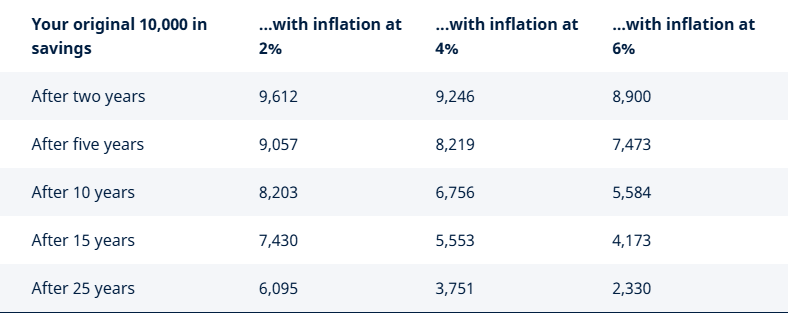
The Schroders data below shows how different levels of inflation could affect the spending power of £10,000 cash savings over 25 years.

Source: Schroders. Assumes no cash interest is earned on the original deposit.

As you can see, even a relatively low level of 2% inflation could diminish the value of your savings significantly over time.

In contrast, investing some of your wealth in the stock market may generate higher returns and give you a better chance of outpacing inflation.

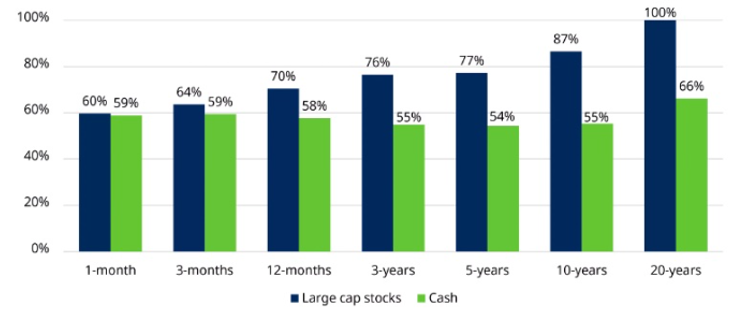
This chart, published by Schroders, shows the percentage of time periods in which US stocks and cash beat inflation between 1926 and 2022.

Source: Schroders

This data shows that investments consistently outperformed cash savings. Moreover, the longer investments were held, the more likely they were to outpace inflation.

If your anxiety about losing money makes you hesitant to invest, a financial planner can help you create a diversified portfolio that aligns with your tolerance for risk and your long-term goals. Through personalised coaching and support, they can help you face your fear and become a confident investor.

3. “I’m fearful that my children’s inheritance will be eroded by tax”

The latest data released by HMRC shows that Inheritance Tax (IHT) receipts for the period April to August 2025 reached £3.7 billion, which is £0.2 billion higher than the same period last year.

This is largely due to frozen IHT thresholds, which haven’t kept pace with inflation. As a result, more estates are triggering an IHT charge or facing a larger tax bill.

Additionally, from April 2027, pensions will no longer be exempt from IHT, which could increase the annual number of IHT receipts further still.

If you’re worried about your family’s inheritance being diminished by your estate’s tax liabilities, a financial planner can help you mitigate a potential IHT bill by:

  • Maximising IHT allowances
  • Gifting some of your wealth during your lifetime
  • Setting up trusts to pass on wealth tax-efficiently
  • Embedding IHT planning in your broader estate plan
  • Using life insurance to cover your estate’s IHT liabilities
  • Adjusting your plans in line with changes to tax legislation.

Moreover, your financial planner can use advanced cashflow modelling to forecast the future value of your estate and estimate your IHT liabilities. This could provide the clarity you need to leave a meaningful legacy for your loved ones without compromising your lifestyle.

Get in touch

If your financial fears are holding you back from achieving your goals, we can help.

Our financial planners can provide the guidance and support you need to overcome these barriers and make the most of your wealth.

Please email hello@bluewealth.co.uk or call us on 0117 332 0230.

Please note

The content of this newsletter is offered only for general informational and educational purposes. It is not offered as, and does not constitute, financial advice.

Blue Wealth Ltd is not responsible for the accuracy of the information contained within linked sites.

Blue Wealth Ltd is an appointed representative of Best Practice IFA Group Ltd, which is authorised and regulated by the Financial Conduct Authority.

Please do not act based on anything you might read in this article. All contents are based on our understanding of HMRC legislation, which is subject to change.

A pension is a long-term investment not normally accessible until 55 (57 from April 2028). The fund value may fluctuate and can go down, which would have an impact on the level of pension benefits available. Past performance is not a reliable indicator of future performance.

The tax implications of pension withdrawals will be based on your individual circumstances. Thresholds, percentage rates, and tax legislation may change in subsequent Finance Acts.

The value of your investments (and any income from them) can go down as well as up and you may not get back the full amount you invested. Past performance is not a reliable indicator of future performance.

Investments should be considered over the longer term and should fit in with your overall attitude to risk and financial circumstances.

Note that life insurance and financial protection plans typically have no cash in value at any time and cover will cease at the end of the term. If premiums stop, then cover will lapse.

Cover is subject to terms and conditions and may have exclusions. Definitions of illnesses vary from product provider and will be explained within the policy documentation.

Approved by Best Practice IFA Group: 21/10/25

Team update – Dan and Sarah’s family golf day and our commitment to cybersecurity

This month, Dan tells us all about his family trip to the AIG Women’s Open golf tournament in Wales.

We also have an important update about our plans for improving cybersecurity at Blue Wealth to ensure the highest standards of data protection.

Keep reading to find out more.

Sarah and Dan had a blast on their family day trip to the AIG Women’s Open golf tournament

Jack (6) and Isabel (10) enjoy taking their golf buggy for a spin

As a sporting family who love the outdoors, we couldn’t miss the opportunity to enjoy a day of world-class golf just over the border in Porthcawl.

The AIG Women’s Open is a major professional golf championship and the largest women’s sporting event ever held in Wales.

It ran over four days, from 31 July to 3 August, and attracted some of the biggest names in the game.

We had a fantastic day watching the ladies on the driving range and the course. There was plenty of entertainment for Jack and Isabel too – from face painting to mini golf.

The weather wasn’t quite as kind as we’ve been used to this summer. But we wrapped up and kept the wind and chill out enough to make the most of every minute.

The drive home was less fun, as we got stuck in a four-hour traffic jam. Overall, it was a great day, although we wouldn’t mind if the event was hosted a little closer to home next time!

Cybersecurity – Our commitment to protecting you

We know that recent TV programmes highlighting cybersecurity threats have raised understandable concerns. At Blue Wealth, protecting your data and financial information is something we take extremely seriously.

We’re currently in the process of applying for Cyber Essentials certification, a government-backed scheme that demonstrates our commitment to strong IT security practices. This includes protecting against the most common forms of cyberattack and ensuring our internal systems are resilient and well-managed.

In addition to our own defences, we apply the same scrutiny to our partners. As part of our due diligence process, we assess the cyber and IT readiness of any third-party suppliers we work with. We want to ensure they uphold the same standards we do when it comes to safeguarding your information.

The good news is that our core financial service providers — platforms, product providers, and custodians — operate IT systems with the same protections you’d expect from a high street bank.

Cybersecurity is constantly evolving, and so are we. We’ll continue to invest in the tools and processes that help keep your data safe.

Get in touch

If you’d like to know more about how the Blue Wealth team can help you with all your financial planning needs, or you have questions about our cybersecurity policy, please get in touch.

Email hello@bluewealth.co.uk or call us on 0117 332 0230.

Please note

This article is for general information only and does not constitute advice. The information is aimed at retail clients only.

All information is correct at the time of writing and is subject to change in the future.

Stealth taxes: What are they and how can you protect your wealth?

With the Autumn Budget only a few months away, there has been growing speculation in the press about the possibility of tax increases.

You might have been keeping a close eye on this commentary and wondering how any potential changes could affect you. After all, higher taxes could mean that you have less disposable income to meet your ongoing needs and save for the future.

However, you may not realise that even if the chancellor makes no changes to existing tax rules, you might see your annual tax liabilities increase due to “stealth taxes”. These are indirect tax increases that often go unnoticed.

Keep reading to learn how these hidden taxes work and discover practical ways to protect your wealth.

Frozen Income Tax thresholds could push you into a higher tax bracket

Income Tax is a major source of revenue for the government. It is payable on most (although not all) types of income that exceed your Personal Allowance, which for most people is £12,570 in the 2025/26 tax year.

The amount of tax you’ll pay on earnings above the Personal Allowance depends on how much of your income falls within each of the following bands:

  • Basic rate – 20% on earnings between £12,571 and £50,270.
  • Higher rate – 40% on earnings between £50,271 and £125,140.
  • Additional rate – 45% on earnings over £125,140.

Historically, these tax bands have increased each year in line with inflation and wage growth.

However, the Personal Allowance, basic- and higher-rate thresholds of Income Tax have not changed since April 2021. Moreover, the chancellor has confirmed that these thresholds will remain frozen until at least April 2028.

This is a classic example of a stealth tax. While there has been no direct increase in Income Tax rates, rising salaries and property prices could mean that more of your earnings fall into the higher tax brackets.

According to the Guardian, this “fiscal drag” means that the number of people paying higher-rate Income Tax is expected to increase by 500,000, to more than 7 million, in the 2025/26 tax year.

What’s more, the additional-rate threshold was reduced from £150,000 to £125,140 in April 2023, resulting in more people paying 45% tax on some of their income.

Static Inheritance Tax allowances could mean that your family pays more tax on your estate

If the value of your estate exceeds certain thresholds when you pass away, your beneficiaries might pay Inheritance Tax (IHT) – the standard rate is 40% in 2025/26 – on a portion of your wealth.

IHT thresholds have been frozen until at least April 2030:

  • The “nil-rate band” is the amount you can pass on before IHT is payable. This has been frozen at £325,000 since April 2009.
  • The “residence nil-rate band” – an additional allowance that may be available if you pass on your main home to your children or grandchildren – has remained at £175,000 since April 2020.

Unfortunately, this failure to keep up with inflation could mean that your family faces a larger IHT bill.

Imagine that your estate was worth £300,000 in 2009. This falls below the nil-rate band, so your beneficiaries would likely not have paid any IHT. Now fast forward to 2025.

According to the Bank of England’s inflation calculator, your estate could now be worth over £481,000. As such, around £156,000 falls beyond the nil-rate band and could trigger an IHT charge (assuming that you cannot benefit from the residence nil-rate band).

Put simply, while the government has not increased the rate of IHT, the freeze on thresholds means that more estates are liable for IHT or facing a higher bill than they might have previously.

Indeed, the latest figures released by HMRC reveal that gross HMRC Tax and NICs receipts for April to August 2025 were £22.1 billion higher than the same period last year.

3 clever ways to protect your wealth from stealth taxes

Fortunately, there are some practical steps you can take to protect your wealth from stealth taxes. Here are three:

1. Rethink your pension contributions

You could reduce your taxable income and potentially avoid moving into a higher tax bracket by paying more into your workplace and private pensions each month.

As such, increasing your pension contributions may help to reduce your tax liabilities while also boosting your retirement savings.

It’s also worth asking your employer if they offer, or would consider offering, a salary sacrifice scheme. This would allow you to exchange or “sacrifice” part of your earnings for other benefits, such as pension contributions.

Your Income Tax and National Insurance contributions would then be calculated based on your reduced salary. As a result, your take-home pay may increase while the amount going into your pension remains the same.

2. Top up your ISAs

In the 2025/26 tax year, you can contribute up to £20,000 in total across your ISA accounts without incurring Income Tax or Capital Gains Tax on any interest or returns. This annual allowance will reset on 6 April 2026 – you can’t carry any of this allowance over into the new tax year, so if you don’t use it, you lose it.

As such, topping up your ISAs could shield more of your wealth from tax and help you maximise tax-efficient growth.

In contrast, any interest you earn on savings held outside an ISA wrapper may be taxed at your marginal rate if you exceed certain thresholds. So, if the frozen Income Tax thresholds have pushed you into a higher band, ISAs could be a valuable tool for reducing the tax you pay on savings interest.

3. Make use of Inheritance Tax gifting allowances and exemptions

Passing on some of your wealth during your lifetime by using IHT gifting allowances and exemptions could lower the value of your estate and minimise future IHT liabilities.

For example, the annual exemption allows you to give away gifts worth up to £3,000 each year (2025/26), without them being added to your estate for IHT purposes.

If rising estate valuations and frozen tax thresholds are likely to increase the IHT bill on your estate, giving while living in this way could be a useful way to protect some of your wealth from stealth taxes.

Get in touch

If you think you might be affected by any of the stealth taxes mentioned above, we can help you keep your wealth as tax-efficient as possible.

Please email hello@bluewealth.co.uk or call us on 0117 332 0230.

Please note

The content of this newsletter is offered only for general informational and educational purposes. It is not offered as, and does not constitute, financial advice.

Blue Wealth Ltd is not responsible for the accuracy of the information contained within linked sites.

Blue Wealth Ltd is an appointed representative of Best Practice IFA Group Ltd, which is authorised and regulated by the Financial Conduct Authority.

Please do not act based on anything you might read in this article. All contents are based on our understanding of HMRC legislation, which is subject to change.

The Financial Conduct Authority does not regulate estate planning, or tax planning.

A pension is a long-term investment not normally accessible until 55 (57 from April 2028). The fund value may fluctuate and can go down, which would have an impact on the level of pension benefits available. Past performance is not a reliable indicator of future performance.

The tax implications of pension withdrawals will be based on your individual circumstances. Thresholds, percentage rates, and tax legislation may change in subsequent Finance Acts

Workplace pensions are regulated by The Pensions Regulator.

The value of your investments (and any income from them) can go down as well as up and you may not get back the full amount you invested. Past performance is not a reliable indicator of future performance.

Investments should be considered over the longer term and should fit in with your overall attitude to risk and financial circumstances.

Approved by Best Practice IFA Group: 18/09/2025

The compounding effect: How it could boost or harm your finances

When a 1920s ad referred to compound interest as “the eighth wonder of the world”, the quote was left unattributed. But that didn’t stop it from becoming synonymous with the celebrated physicist, Albert Einstein.

The link was likely intended to lend credibility to a statement that at first glance seems bold. And yet, compounding could be key to the success of your long-term financial plans.

As Einstein did or didn’t say, “He who understands it, earns it, he who doesn’t, pays it.” Whoever did say this, knew what they were talking about.

The compounding effect – essentially growth on growth that snowballs over time – can have an enormous impact on your finances. It can significantly increase the size of your savings and investments in the long term but, if not carefully managed and understood, it can also work against you.

This handy guide clearly explains how compounding works, and provides examples of how it might boost or harm your financial circumstances.

Download your copy here: The compounding effect: How it could boost or harm your financesto find out why compounding may be an essential part of your long-term financial plan.

Please get in touch if you’d like to speak to one of our team about how we could work with you.

Please note: This guide is for general information only and does not constitute advice. The information is aimed at retail clients only.

The value of your investments (and any income from them) can go down as well as up and you may not get back the full amount you invested.

Past performance is not a reliable indicator of future performance.

Investments should be considered over the longer term and should fit in with your overall attitude to risk and financial circumstances.

The Financial Conduct Authority does not regulate cashflow planning.

A pension is a long-term investment not normally accessible until 55 (57 from April 2028). The fund value may fluctuate and can go down, which would have an impact on the level of pension benefits available. Past performance is not a reliable indicator of future performance.

The tax implications of pension withdrawals will be based on your individual circumstances. Thresholds, percentage rates, and tax legislation may change in subsequent Finance Acts. 

Team update – Adrian’s triathlon triumph and a fun team trip to Barcelona

We have plenty to update you on this month – the Blue Wealth team has been busy!

Also, if you fancy a summer boat trip on The Matthew, Bristol’s historic floating harbour, this July, remember to book your place by emailing your adviser.

Adrian did himself proud in the First Tri Lydney Olympic triathlon

After months of dedicated training, Adrian successfully completed this challenging event in the beautiful Forest of Dean on Sunday 27 April.

The triathlon included:

  • A 750-metre pool-based swim – According to Adrian, “There were five lanes with four swimmers in each lane, starting in waves. So, it felt a bit like being in a washing machine!”
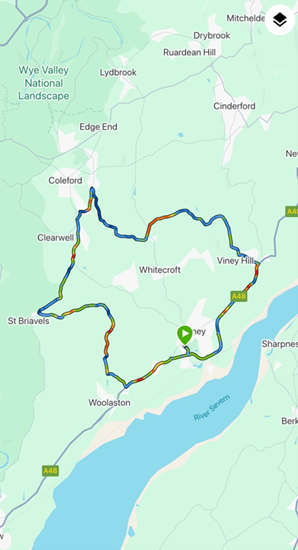
  • A 43-kilometre cycle – “The course was excellent, with 1,821 feet of ascent over 24 miles.”
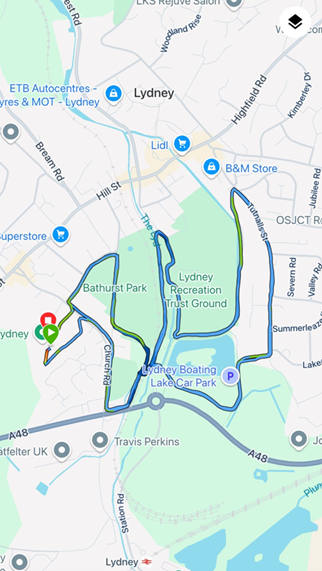
  • A 10-kilometre run – “A two-lap run around a very attractive and varied course in Lydney.”

Lydney cycling route

Lydney running route

Adrian completed the race in 2 hours and 47 minutes (and 8 seconds, if you’re counting), and placed 53rd out of 94 entrants. Pretty impressive, especially as he was the 5th oldest competitor!

He certainly earned his medal.

When asked about the key highlights and challenges of the day, Adrian said, “The weather was excellent, the race organisation was first class, and I loved the camaraderie between the competitors.

“I felt a real sense of achievement having completed my first triathlon in 15 years.”

The swim was Adrian’s biggest challenge as he has always felt stronger cycling and running. He also struggled to maintain his blood sugar levels during the bike ride, but thankfully, a stash of Jelly Babies saved the day.

Demonstrating a true runner’s mindset, Adrian managed to keep going despite his right calf tightening midway through the course.

Overall, the event was a huge success. “It was an absolute joy to be back doing something that I have always loved and had been away from for far too long.

“Also, three months of training have had such a positive impact on my health and fitness. It shows that at nearly 60, there’s life in the old dog yet!”

Adrian is already planning his next fitness challenge. He’ll be donning his trainers for the Clevedon 10K run on Wednesday 10 June, before tackling the Trimax Cromhall Evening Tri Series of midweek sprint triathlons between June and September.

Our financial planners enjoyed a short trip to Barcelona

Adrian, Dan, Rob, and Nathan took a city break to Barcelona in Spain, from 23 to 25 April, in celebration of the company’s ongoing success.

On arrival, the team were surprised to find the city filled with people exchanging books and roses.

In Barcelona, 23 April is Sant Jordi or Saint George’s Day, which is a major cultural festival in Catalonia. It’s a day dedicated to love, so, traditionally, couples and loved ones give each other gifts of books and roses.

The streets were lined with stalls selling these items, and many of the central roads were closed due to the large crowds that gathered.

Dan said, “It was really busy, but also beautiful with lots of roses everywhere.”

On the first day, the group enjoyed wandering around the city and sampling the different tapas being sold in the local bars.

On the second day, they explored the Sagrada Familia, the largest unfinished Catholic church in the world, which was designed by the famous architect and designer, Antoni Gaudi. The team also enjoyed a leisurely stroll through Gaudi’s Park Güell.

The group also squeezed in a trip to Camp Nou (the biggest stadium in Europe), which included a tour of the FC Barcelona Museum.

Rob said, “As avid football fans, it was fantastic to see the club’s historic memorabilia and most celebrated trophies up close.”

How did they end this busy day of sightseeing? With more tapas, of course!

On the final day, the team went on a two-hour scooter tour of the medieval city, beaches, and Olympic Village (La Vila Olimpica del Poblenou).

Nathan said, “It was a brilliant trip. We packed so much into a few days, and it was great to spend time together outside the office.”

Adrian added, “I’d definitely go back to Barcelona. There’s so much to see and do, and the weather was gorgeous.”

Get in touch

If you’d like to find out more about getting involved with the July boat trip, we’d love to hear from you.

And as always, if you have any questions about Blue Wealth and how we can support you with all your financial planning needs, please get in touch.

Please email hello@bluewealth.co.uk or call us on 0117 332 0230.

Please note

This article is for general information only and does not constitute advice. The information is aimed at retail clients only.

All information is correct at the time of writing and is subject to change in the future.

4 money lessons to boost your children and grandchildren’s financial independence

Introducing children to money matters from a young age could help them build the financial independence they need to achieve their goals as they get older.

Yet, a survey by the Money & Pensions Service has revealed that 3 in 4 UK teachers believe that most young people leave education without the financial skills they need.

So, as a parent or grandparent, you could play a key role in teaching the young people in your family how to manage their money responsibly.

My Money Week, which runs from 9 to 13 June, aims to get young people aged 3 – 19 excited and interested in financial matters.

So, it’s the perfect time to build your child or grandchild’s financial knowledge. Here are four important money lessons to get you started.

1. Understanding where money comes from and recognising its value

Learning the value of money and where it comes from is an important stepping stone for gaining more advanced financial knowledge and skills.

Children as young as three or four years old can learn to recognise the value of different coins and notes, hand over money in shops, and start using a piggy bank.

As they get older, one of the most fundamental money lessons to teach your children or grandchildren is that money isn’t an unlimited resource that is magically dispensed from cash machines or accessed from their phones.

With the rise of high-earning influencers and a growing societal focus on building wealth through passive income, children might not appreciate the connection between work and reward.

You can demonstrate this link by giving them opportunities to earn money, such as by doing chores around the house or encouraging them to find a weekend job once they’re old enough.

2. Setting and sticking to a realistic budget

Once your child or grandchild appreciates that money is usually earned by work or effort and that everyone must live within their means – no matter what their financial situation is – you can teach them how to budget.

From around the age of seven or eight, most children can grasp the difference between “needs” and “wants”. They might want those sweets or a new toy, but they need shelter and clothes.

Try giving them envelopes or jars that they can decorate and mark as “needs” and “wants”. Then, ask them to divide their pocket money as they see fit. This is a great way to foster financial independence and responsibility.

Older children might enjoy using budgeting apps or getting involved with managing the finances for a family occasion or holiday.

Encourage your children and grandchildren to set short- and long-term goals, possibly with mini-milestones along the way. Knowing that there is a reward not far ahead could help keep them motivated to stick to their budget.

3. Avoiding expensive or unnecessary debt

According to data published by the debt charity StepChange, the average unsecured debt amount for each individual who sought their help rose from £14,654 in 2023 to £15,672 in 2024. This equates to a £1,018 (7%) increase.

High levels of debt can have wide-ranging effects on a person’s life, such as:

  • Diminishing mental health and wellbeing
  • Restricting life choices in both the short and long term
  • Increasing the risk of defaulting on loans or needing to take on more debt.

Of course, borrowing money is sometimes a necessary part of life. For example, young people might need to take out a mortgage to buy their first home.

That’s why it’s crucial to teach your children and grandchildren:

  • How credit works – It’s not “free money” as the loan will usually need to be repaid, and there is likely to be interest added on top.
  • The different types of credit available – Such as credit cards, mortgages, and student loans.
  • How to tell the difference between “good” and “bad” debt – Looking at factors such as the interest rate and the effect on their credit score (positive or negative).

Learning how to use borrowing sensibly could help young people make informed financial decisions.

4. Staying safe when managing finances online

Figures released by Finder reveal that in 2025, 87% of UK adults use some form of online or remote banking.

While digital platforms can make managing money extremely convenient and efficient, individuals who aren’t vigilant could be vulnerable to financial fraud and scams.

The Financial Ombudsman Service reported that fraud and scam complaints hit their highest level between April and June 2024. More than 8,700 cases were filed and over half of those related to online bank transfers.

So, teaching your children and grandchildren how to keep their money safe online is vital. You could do this by:

  • Sharing real-life examples of financial scams and highlighting the red flags to look for
  • Emphasising the importance of not sharing passwords, PINs, or bank details
  • Explaining the risks of sharing personal information on social media
  • Encouraging them to regularly monitor their accounts and transactions
  • Fostering open communication about money and financial concerns.

Get in touch

If you’d like to find out how we can work with you and your family to support all your financial planning needs, we’d love to hear from you.

Please email hello@bluewealth.co.uk or call us on 0117 332 0230.

Please note

The content of this newsletter is offered only for general informational and educational purposes. It is not offered as, and does not constitute, financial advice.

Blue Wealth Ltd is not responsible for the accuracy of the information contained within linked sites.

Blue Wealth Ltd is an appointed representative of Best Practice IFA Group Ltd, which is authorised and regulated by the Financial Conduct Authority.

Your home may be repossessed if you do not keep up repayments on a mortgage or other loans secured on it.

Approved by Best Practice IFA Group: 20/05/25

Guide: How financial planning could help you answer essential “what if?” questions

Financial planning is all about helping you to reach your life goals. Ultimately, the objective is for your wealth to allow you to achieve all the things you want to do now and in the future.

That might be as simple as being able to relax and enjoy a comfortable retirement or helping your children through education or onto the property ladder. Alternatively, you may want to start a business, retire abroad, or leave a legacy to causes you care about.

When making a financial plan, you could be looking several decades ahead. During that time, a variety of unknowns could crop up, altering your ability to meet your goals.

Unfortunately, there’s no such thing as a crystal ball. However, when it comes to your finances, cashflow planning could help you visualise how your wealth may fluctuate as you progress through life, and reveal answers to a variety of “what if” questions.

Find out more in this insightful guide, which covers:

  • How cashflow planning works
  • How cashflow planning could ease your financial concerns
  • Examples of when a cashflow model might help you forecast your financial future
  • The advantages and disadvantages of using a cashflow model as part of your financial plan.

Download your copy here: ‘How financial planning could help you answer essential “what if?” questions’ to find out how cashflow planning could help you answer questions, ease worries, and give you confidence in the future.

Please get in touch if you’d like to speak to one of our team about how we could work with you. 

Please note: This guide is for general information only and does not constitute advice. The information is aimed at retail clients only.

The Financial Conduct Authority does not regulate cashflow planning.

How changing your perception of wealth could help you live happier, now and in retirement

Do you consider yourself wealthy? How about the man next door, or the woman over the road?

While we might see a neighbour with a fancy car and assume they’re rich, we don’t know anything about their underlying circumstances. It can be very easy to jump to conclusions about others’ “wealth” and often compare our own financial circumstances unfavourably.

In fact, according to an HSBC report, the UK has a “wealth perception gap”, with individuals in every wealth bracket consistently underestimating their earnings compared to others.

Keep reading to find out more.

High earners may not consider themselves wealthy as they compare themselves to others

In the report, ‘Your Money’s Worth: Defining Wealth in 2025’, findings reveal that the majority of those earning £100,000 a year don’t consider themselves affluent. The threshold for “wealthy” is actually perceived to be an annual salary of £213,000.

For comparison, according to the Office for National Statistics (ONS), this is more than six times the national average salary.

So, why is there such a big discrepancy between what we earn and what we consider to be wealthy? According to the report, the answer could be psychological. Key findings include that:

  • It’s very common for us to compare our finances unfavourably to those of others.
  • We can confuse big spending with affluence, not digging deeper into the fact these “wealthy” people may have got into debt to fund purchases.
  • People often start valuing non-material possessions when they realise material things didn’t buy them happiness.

Perceptions of wealth can become distorted over time, with higher earners often spending more on clothes, travel, homeware, and organic food than their average-earner counterparts. As these spending habits become routine, though, they are normalised. The expenditure might continue, but it’s no longer linked to a perception of affluence.

Younger generations increasingly see lifestyle and wellbeing as a symbol of wealth

The way we measure wealth today is shifting. Traditionally associated directly with income, there has been a significant move towards seeing lifestyle and wellbeing as better indicators.

This is particularly the case for younger demographics. Almost half (49%) of Gen Z view wealth in non-material terms, and a third of 18–24-year-old high earners believe that having a good work-life balance is a signifier of wealth.

Younger generations are also much more comfortable openly discussing their finances. Half of 18–24-year-olds said they like discussing money, compared with just 3% of over-55s.

Taking a leaf out of their books could help you find value outside of wealth creation, learn to openly discuss wealth and what it means to you, and shift your perceptions of what it is to be “wealthy”.

With this in mind, when do you stop wealth building and start looking at how to use your money, now and throughout retirement?

Shifting your perception from constantly amassing wealth to working out how to use it wisely can be more easily achieved by working with a financial planner.

3 ways a financial planner can help you change your perception of wealth to live a happier life

1. Introducing you to the concept of “enough”

“Enough” means something different to everyone. Realistically, you want to be able to pay your bills while funding your chosen lifestyle throughout your retirement.  A financial planner can help you devise a plan to support this and to manage your expectations.

Constantly chasing after wealth can start to become wearing, especially as you near retirement.

It’s about finding the balance between having “enough” without compromising on what you want out of life.

2. Helping you understand your position right now and looking at your aspirations for retirement

Where are you now? How do you live, and is there anything stopping you from doing the things you want to do? And when you retire, what are your plans? Travel, looking after grandchildren, moving abroad?

There’s not a one-size-fits-all answer, which means there’s not a one-size-fits-all solution. You could have a small pension pot and be perfectly happy staying at home and enjoying time with family.

Or, you might have an overflowing pension and still feel unfulfilled because you’re not spending enough time at home, or spending money in the “wrong” places. Once you’ve uncovered your own aspirations, you can plan accordingly.

3. Teaching you to focus on your financial goals without comparing yourself to others

As you can see from the report, wealth perception is subjective. All too often, you might find yourself looking to others’ material possessions as an indicator, comparing yourself unfavourably if you have a smaller house or older car, for example.

A financial planner will help you keep your focus on your own circumstances and goals, gently discouraging you from looking around you and instead guiding you along your own path.

Get in touch

Resolutely focusing on your own finances without getting sidetracked by what others have – or what you perceive they have – means shifting your mindset around what is “enough”.

We can help you work out what your goals are, now and in the long term, to help you understand how to achieve these aspirations.

Please email hello@bluewealth.co.uk or call us on 0117 332 0230.

Please note

The content of this newsletter is offered only for general informational and educational purposes. It is not offered as, and does not constitute, financial advice.

Blue Wealth Ltd is not responsible for the accuracy of the information contained within linked sites.

Blue Wealth Ltd is an appointed representative of Best Practice IFA Group Ltd, which is authorised and regulated by the Financial Conduct Authority.

Approved by Best Practice IFA Group: 28/4/25

Business owner? 3 important tasks to complete before the tax year ends

The tax year end on 5 April is rapidly approaching , so you have just a few weeks left to make the most of your tax allowances and exemptions for 2024/25.

What’s more, chancellor Rachel Reeves announced significant tax changes for business owners in her Autumn Statement last year, many of which come into effect from 6 April.

It’s important to understand how these new rules could affect your finances so that you can plan for the new tax year and beyond.

Read on to discover three important tasks to check off your to-do list if you want to keep your personal and business finances as tax-efficient as possible.

1. Make the most of your pension Annual Allowance

If you’ve ever uttered the words, “my business is my pension”, and paying into a separate scheme is low on your list of priorities, you’re not alone. According to This is Money, just 51% of business owners pay into a pension each month.

However, relying on your business to fund your retirement might be a risky strategy.

External factors could affect both the income your company generates and how much wealth you walk away with if you sell. For example, planned changes to Business Asset Disposal Relief (BADR) could mean that you incur a higher Capital Gains Tax (CGT) bill if you sell your company after 5 April (more on this later).

Alternatively, it might be difficult to access the funds you have tied up in your business when you retire.

That’s why paying into a pension and making the most of your Annual Allowance can provide valuable peace of mind.

Your Annual Allowance is the maximum amount you can contribute to your pension in a single tax year without facing an additional tax charge.

Most people can contribute up to £60,000 – the Annual Allowance for the 2024/25 tax year – or 100% of their earnings, whichever is lower.

Your Annual Allowance may be lower if your income exceeds certain thresholds or you have already flexibly accessed your pension.

Remember too that you can carry forward unused Annual Allowance from the previous three tax years. So, 5 April could be your last chance to make the most of any unused allowance from the 2021/22 tax year.

2. Prepare for changes to employer National Insurance rates

In her Autumn Budget, the chancellor announced that the rate of National Insurance (NI) you pay as an employer will increase by 1.2% from 6 April to 15%.

The threshold at which you start to pay NI will also be reduced from £9,100 to £5,000 a year from the start of the 2025/26 tax year. This threshold will remain frozen until 6 April 2028 and then increase in line with the Consumer Prices Index (CPI) thereafter.

While the Employment Allowance will increase from £5,000 to £10,500, and become available to all businesses from 6 April, changes to the NI rates for employers could have significant cost implications for your company.

As such, you might want to consider paying any planned bonuses before the April increase.

Additionally, switching to a “salary sacrifice” scheme could help you mitigate the effect of these changes. This means reducing your employees’ cash pay in exchange for a non-cash benefit, such as pension contributions.

The main benefit of salary sacrifice is that both you and your employees are likely to pay less NI, as the rate is calculated based on employees’ earnings. What’s more, your staff could see their take-home pay increase.

So, implementing such a scheme may make financial sense. There could be non-financial benefits too, such as boosting employee morale and helping you attract and retain talent.

3. Dispose of personal and business assets strategically

In the build up to the Autumn Budget, there was widespread speculation that CGT rates would be brought in line with Income Tax rates.

While the chancellor did not go quite this far, she did increase some CGT rates, which took effect immediately (from 30 October 2024).

CGT rose from 10% to 18% for basic-rate taxpayers, and from 20% to 24% for higher-rate taxpayers. There are no longer separate rates for residential property disposals.

Thankfully, the Annual Exempt Amount – which is the amount of profit you can make when you sell chargeable assets before CGT becomes payable – remains unchanged. It stands at £3,000 for the 2024/25 tax year.

So, if you’re planning to sell any of your assets, it might be worth doing so strategically. For example, you could spread sales over several tax years to avoid exceeding your Annual Exempt Amount. Alternatively, you might want to transfer assets to your spouse or civil partner to make use of their Annual Exempt Amount.

As mentioned previously, the chancellor also announced changes to BADR in her Budget.

If you’re eligible for BADR – which allows you to pay less CGT when you dispose of all or part of your business – the rate of CGT will rise from 10% to 14% from 6 April 2025, and to 18% from 6 April 2026.

As such, if you’re considering selling your business or shares in a business, you may want to do so before the new rates take effect.

Get in touch

Professional financial advice could play a key role in helping you manage your business and personal finances tax-efficiently.

If you’d like help preparing for the tax year end or planning for the year ahead, we’d love to hear from you.

Please email hello@bluewealth.co.uk or call us on 0117 332 0230.

Please note

The content of this newsletter is offered only for general informational and educational purposes. It is not offered as, and does not constitute, financial advice.

Blue Wealth Ltd is not responsible for the accuracy of the information contained within linked sites.

Blue Wealth Ltd is an appointed representative of Best Practice IFA Group Ltd, which is authorised and regulated by the Financial Conduct Authority.

A pension is a long-term investment not normally accessible until 55 (57 from April 2028). The fund value may fluctuate and can go down, which would have an impact on the level of pension benefits available. Past performance is not a reliable indicator of future performance.

The tax implications of pension withdrawals will be based on your individual circumstances. Thresholds, percentage rates, and tax legislation may change in subsequent Finance Acts.

Workplace pensions are regulated by The Pension Regulator.

Approved by Best Practice IFA Group 17/03/25